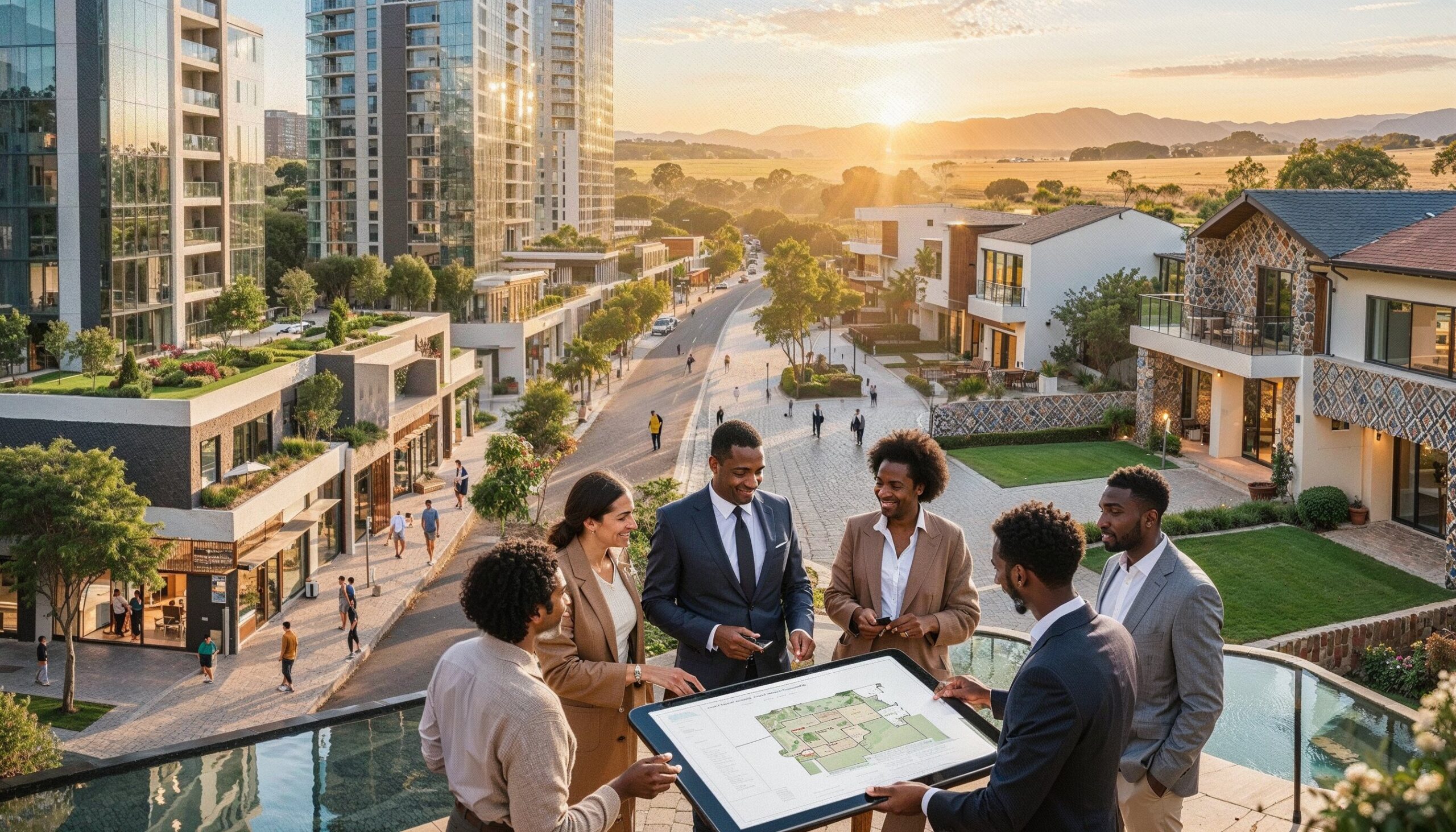
Africa’s real estate market has emerged as one of the most dynamic investment landscapes globally. With rapid urbanization, a growing middle class, and increased foreign investment, the sector is experiencing unprecedented growth. From residential developments to commercial hubs, logistics infrastructure, and mixed-use projects, the continent is redefining its property landscape and creating opportunities for investors, developers, and entrepreneurs.
Rapid Urbanization and Demographic Drivers
Africa is the fastest urbanizing continent in the world, with over 40% of its population living in cities—a figure projected to reach 60% by 2050. Cities like Lagos, Nairobi, Accra, Kigali, and Johannesburg are witnessing booming demand for housing, commercial spaces, and urban amenities. The growing middle class, characterized by rising income levels and increased consumption, is fueling demand for quality residential properties, gated communities, and modern retail centers.
Residential Real Estate: From Affordable Housing to Luxury Developments
Residential real estate remains the backbone of Africa’s property sector. There is a strong push to address the housing deficit, estimated at over 60 million units across the continent. Governments, in partnership with private developers, are introducing affordable housing schemes and mortgage financing programs to bridge this gap.
Simultaneously, luxury and high-end developments are on the rise in major urban centers, catering to executives, expatriates, and wealthy Africans seeking modern, secure, and amenity-rich living spaces. Mixed-use developments, combining residential, commercial, and recreational spaces, are increasingly popular for urban planning and investor appeal.
Commercial Real Estate: Offices, Retail, and Co-Working Spaces
Africa’s commercial real estate sector is evolving rapidly. Urbanization and business growth are driving demand for modern office spaces, with cities like Johannesburg, Nairobi, and Lagos becoming regional business hubs. Co-working spaces and flexible office solutions are gaining popularity among startups, SMEs, and multinational corporations seeking adaptive work environments.
Retail spaces are also evolving. Shopping malls, supermarkets, and lifestyle centers are expanding beyond traditional markets, targeting middle-class consumers in urban and peri-urban areas. E-commerce growth is influencing retail real estate, prompting hybrid models that integrate warehousing and last-mile delivery hubs.
Industrial and Logistics Real Estate
E-commerce, manufacturing, and intra-African trade are driving demand for industrial and logistics properties. Ports, warehouses, and distribution centers are expanding in cities such as Durban, Mombasa, Lagos, and Tema. The African Continental Free Trade Area (AfCFTA) is expected to accelerate logistics investments, as businesses seek efficient distribution networks across borders.
Government Policies and Investment Incentives
Several African countries are implementing policies to attract foreign investment and streamline property development. Tax incentives, land reforms, and simplified registration processes are boosting investor confidence. Governments are increasingly partnering with private developers on public-private partnerships (PPPs) for affordable housing, urban renewal projects, and infrastructure development.
Technology and Proptech Innovations
Technology is transforming Africa’s real estate landscape. Proptech startups are improving property listing services, online transactions, mortgage facilitation, and property management. Platforms offering virtual tours, digital title registration, and blockchain-based property verification are enhancing transparency and reducing transaction risks.
Key Trends Driving Growth
- Urbanization and Demographic Shifts – Rising urban populations increase demand for housing and commercial spaces.
- Affordable Housing Initiatives – Governments and developers address housing deficits through financing schemes and PPPs.
- Mixed-Use Developments – Integrated residential, commercial, and recreational projects are redefining city planning.
- Industrial and Logistics Expansion – Growth in e-commerce and regional trade drives warehouse and distribution center demand.
- Proptech Adoption – Digital solutions streamline property transactions and management, improving transparency.
- Sustainable Development – Green buildings and energy-efficient designs are gaining traction in urban planning.
Opportunities for Investors and Developers
Africa’s real estate sector offers significant potential for both local and international investors:
- Residential Projects – Affordable housing, gated communities, and luxury apartments.
- Commercial Ventures – Office parks, co-working spaces, and retail centers.
- Industrial Investments – Warehousing, logistics hubs, and cold-chain facilities.
- Urban Renewal Projects – Mixed-use developments and city modernization programs.
- Proptech and Digital Services – Platforms that enhance property discovery, financing, and management.
Africa’s real estate sector is entering a transformative phase. Urban growth, rising incomes, technological innovation, and supportive policies are creating a thriving ecosystem for developers, investors, and entrepreneurs. The sector is not only responding to immediate housing and commercial demands but also shaping modern, resilient, and sustainable cities. For stakeholders seeking growth and long-term impact, Africa’s property market presents a compelling opportunity.
Read more on The Big 10:
Innovative Solutions to Africa’s Water Scarcity Issues: Sustainable Approaches and Technologies
Key Sectors Driving Africa’s Economic Growth: A Deep Dive into Industry Development
Africa’s Infrastructure Boom: How Construction and Real Estate are Shaping the Continent’s Future